
Rust Removal Methods: 6 Best DIY Solutions & Professional Techniques for Safe Metal Restoration
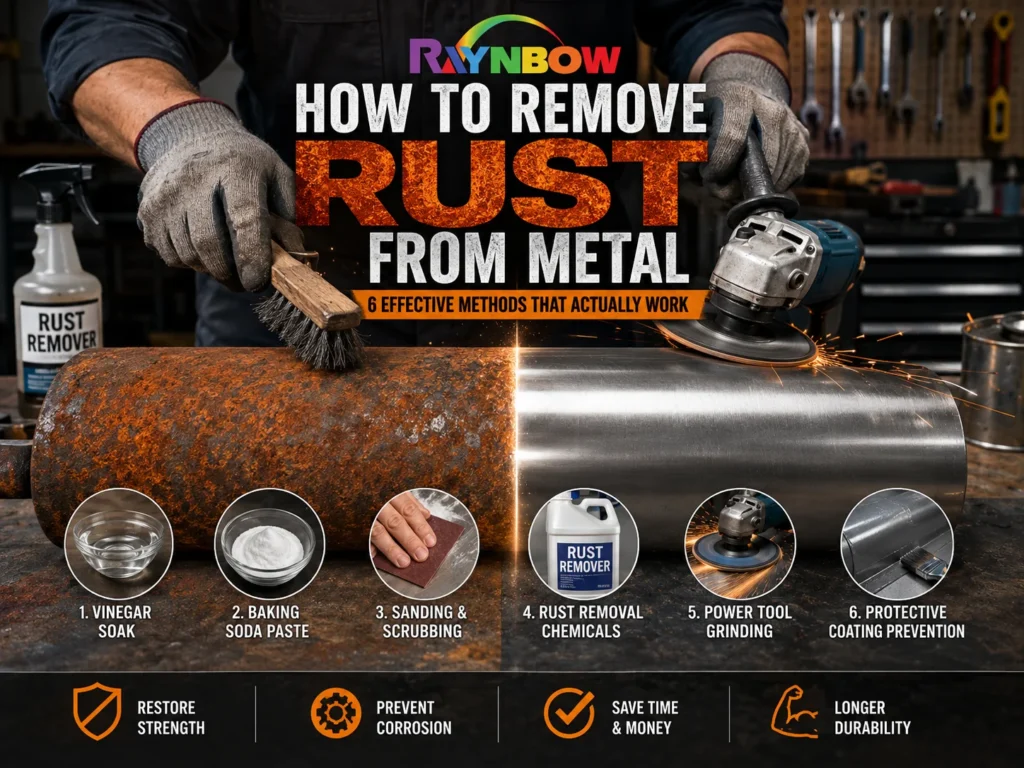
Rust removal is not as complicated as it seems, and in most cases, it can be handled with simple DIY methods or professional surface treatment. The right approach depends on how deep the rust has penetrated and the type of metal involved.
In this blog, we will explore the most effective rust removal methods, from basic home solutions to professional sandblasting. You will also learn when it is time to move beyond DIY fixes and how to properly protect metal after rust removal.
6 Most Effective Rust Removal Methods
The ideal rust removal method depends on the size of the item, how deep the rust is, and how much care you need to take with the metal. Start with the least aggressive option that can still get the task done right.
1. Manual Sanding And Wire Brushing to Remove Rust
This works best on light surface rust that hasn’t penetrated deep into the metal. Works nicely on tools, brackets, hardware, small panels and other things where the rust is noticeable, but not bad.
Sanding and wire brushing are inexpensive, simple and effective for modest jobs. It also lets you check out the metal as you go, which is essential when you are not sure how deep the rust penetrates.
Step-By-Step Process
- Pre-wash the item with soapy water to remove dirt, grease or oil.
- Use a wire brush, steel wool, or sandpaper to scrub the affected region.
- If you wish to minimise the damage to the metal, try a finer grit, such as 320 grit or similar.
- Clean the surface and inspect for any rust left.
- Before you apply paint, primer or other protective coating, be sure the metal is totally dry.
2. White Vinegar Rust Removal
White vinegar is a cheap way to clean small metal objects with minor corrosion. The vinegar contains acetic acid, which will dissolve the iron oxide slowly. It is good for bolts, hand tools, small fittings and anything else that you can immerse.
This is not the fastest way, but it’s one of the easiest ways. It is also good for folks who desire a cheap option before attempting harsher goods.
Step-By-Step Process
- Place the rusty object in white vinegar.
- For bigger surfaces, use a moistened towel to apply vinegar.
- Add salt if necessary to boost acidity and promote the process
- Allow the product to sit for several hours or overnight, depending on the severity of rust.
- Remove any loose rust by scrubbing or wiping.
- Rinse well and dry the metal at once.
3. Baking Soda Treatment to Remove Rust
Baking soda is a weak alkaline, most useful for surface rust. It is not as strong as vinegar or a commercial remover, but it can be good for fragile items or for rust that is still mild.
If you want to clean metal softly and without harsh chemicals, it’s a fantastic approach.
Step-By-Step Process
- Mix baking soda and water together until thick and spreadable.
- Just smear the paste on the rusted places.
- Allow 1 to 2 hours for it to work on the rust.
- Use a brush or cloth to scrub off the residue.
- Rinse with water and dry well.
If rust remains after one round, repeat the process. It works best on shallow corrosion, not thick scale rust.
4. Lemon Juice And Salt Method to Remove Rust
Lemon juice is a good choice for minor surface rust areas because it includes citric acid. Salt acts as a little abrasive and helps the mixture go into the rust.
This is a simple and effective way for small items, but not for significant rust.
Step-By-Step Process
- Apply lemon juice to the corroded area.
- Sprinkle some salt on top.
- Leave it for a few hours to allow the acid to soften the rust.
- Scrub with a firm brush.
- Rinse the metal thoroughly and dry.
5. Commercial Rust Removers
Moderate rust is best treated using commercial rust removers. They are stronger than home cures and usually work faster. They work well when sanding is not good enough, but the rust is not bad enough to require blasting.
How To Apply Rust Remover Safely
- Use personal protective equipment (PPE) such as gloves and safety eyewear.
- First, clean and degrease the surface so the substance can reach the rust.
- Follow the directions on the packaging for rust removal.
- For sprays, this is frequently done from approximately 20 cm distance.
- Use the correct dwell time. Some sprays work in 5-10 minutes, some soak treatments may take many hours.
- Remove loose rust by wiping or rinsing as advised.
6. Professional Sand Blasting
For extensive rust, Professional sandblasting is recommended. It’s one of the most effective ways to clean large metal surfaces as it eliminates tenacious rust, old paint and other impurities much more quickly than manual means.
This is the go-to option when the rust is too deep or too widespread for DIY cleaning.
How The Sand Blasting Process Works
Professional sandblasting starts with selecting the right abrasive and pressure based on the condition of the metal.
After selection, a high-pressure stream of abrasive material is then directed onto the surface to remove rust, old paint, and other contaminants.
This process leaves behind a clean, evenly textured surface that is ready for coating. Once complete, the metal is immediately prepared for painting or powder coating to ensure long-lasting protection against corrosion.
Which Rust Removal Method Works Best?
The ideal solution depends on cost, difficulty, and the amount of rust you are dealing with. If it’s a minor rust area, a cheap DIY technique can be excellent, but it won’t help much with severe corrosion.
Rust Removal Method Comparison Table
Method | Cost | Difficulty | Effectiveness |
Vinegar | Low | Easy | Moderate |
Sanding | Low | Moderate | Good |
Rust Remover | Medium | Easy | High |
Sand Blasting | Medium-High | Professional | Excellent |
When DIY Rust Removal Is No Longer Enough
DIY approaches have their limits. But when the rust gets bad, or starts eating into the essential sections, hand tools and home remedies won’t cut it.
That usually applies to:
- Structural steel in construction
- Industrial plant and equipment
- Automotive underbodies and chassis
- Marine equipment exposed to seawater
- Large metal surfaces, like gates, fences, and trailers
At this stage, it’s time to move beyond basic cleaning and look at expert sandblasting. A light DIY patch will not last if the rust is deep enough to affect strength or coating effectiveness.
Why Sandblasting Is Often The Preferred Choice For Heavy Rust
Sandblasting is popular because it swiftly and uniformly strips away hard rust, old paint and pollutants. Often, the greatest solution for significant corrosion is that it does more than clean the surface. It prepares the metal for the next coating.
That makes it ideal for:
- Steel structures
- Machinery
- Automotive parts
- Gates
- Fences
- Trailers
It also creates a textured surface profile that is ideal for repainting, powder coating, or industrial primers. That profile helps coatings stick better, which means better durability and less chance of the rust returning.
What To Do After Rust Is Removed
Once the rust is gone, the metal is vulnerable. Bare steel can flash rust very quickly if it is left exposed to air and moisture.
After rust removal:
- Properly clean and dry the surface.
- Apply a rust-inhibiting primer, such as a zinc-rich primer or a high-build epoxy primer.
- Use paint or powder coating for metal protection.
- Regularly keep the surface clean and reapply protective sprays as necessary.
This step is essential. Removing the rust is only half the job. Protecting the metal is what makes the result last.
Raynbow Restorers: Perth’s Trusted Experts for Rust Removal, Sandblasting & Protective Coatings
At Raynbow Restorers, we restore rusted metal with professional sandblasting and protective coating solutions tailored to the job.
Just bring your rusted metal items to us, and our experienced team will take care of the rest. We’ll remove rust and contaminants through professional sandblasting, prepare the surface for perfect coating, and apply high-quality paint or powder coating finishes so your metal stays protected, looks great, and remains durable for years to come.
Call us today to get a quote and bring your metal back to a strong, reliable finish.
FAQs
What is the fastest way to remove rust?
For minor things, commercial rust removers or quality sprays are often the fastest DIY alternative. For larger or highly corroded pieces, sandblasting is generally the fastest industrial procedure.
Does vinegar really remove rust?
Yes. Vinegar’s acetic acid reacts with iron oxide and aids in dissolving mild rust. It works well for tiny things or superficial rust areas.
Is sandblasting better than chemical rust removers?
For heavy rust, yes. Sandblasting works better, as it removes more rust and provides a clean profile for the coatings. Chemical removers are better for smaller or more sensitive jobs.
Can rust spread to other metal surfaces?
Rust itself does not jump from one thing to another. But moisture, touch, and improper storage can spread the conditions that cause rust to occur elsewhere.
Should I paint over rust?
No. Rust is permeable; paint on rust generally fails early. First, the rust must be removed or converted. Then the metal must be primed and painted.